
Project description
SOFIA stands for "Southern Ocean Fine-scale Interactions with the Atmosphere". In SOFIA, our goal is to quantify how heat moves between the atmosphere, the ocean surface, and the deep ocean in the Southern Ocean.
A strong motivation for this is that almost all (around 89%, ref.) of the excess heat in the Earth system due to human-made greenhouse gas emissions ends up in the ocean. Yet, there still exists large uncertainty into what regulates how fast this heat enters the ocean, inhibiting our understanding of future changes in ocean heat storage, sea level, and climate risks.
The Southern Ocean is the project’s natural focus. It acts like a vast heat sponge, taking up the majority of the global ocean’s extra heat. Yet, current climate models can disagree by several tens of percent in their Southern Ocean heat uptake, largely because they cannot fully resolve the intense winds, sharp fronts, eddies, and turbulent motions that dominate these waters.
To tackle these challenges, SOFIA combines high‑resolution coupled ocean–atmosphere simulations with new in‑situ observations collected by autonomous robotic platforms operating in some of the most remote parts of the planet. The project also exploits data from ESA’s Surface Water and Ocean Topography (SWOT) satellite to map vertical ocean motion and fine‑scale features across the entire Southern Ocean.
We hope to build a clearer and more predictive understanding of how the ocean regulates Earth’s climate — knowledge that is essential for improving future climate projections, informing international climate assessments, and supporting robust adaptation and mitigation strategies.
You can read more about SOFIA here.
Key objectives
- Quantify how Southern Ocean storms control the exchange of heat between the atmosphere and the upper ocean.
- Determine how ocean fronts, eddies, and filaments move heat from the surface into the ocean interior.
- Reveal the role of small‑scale vertical motions in setting where and how the ocean stores heat.
- Reduce uncertainties in Southern Ocean heat uptake in climate models to improve long‑term projections.
Work packages
Work Package 1 - Uncovering ‘hotspots’ of Southern Ocean air-sea fluxes and fine-scale ocean variability
In WP1, we aim to investigate the link between regions and seasons of high heat exchange variability to storms and small-scale ocean processes. In addition, we will examine how areas with strong mesoscale activity drive large gradients in heat and moisture between the ocean and air that set this air-sea exchange.
Our goal is to understand how storm-driven mixing transfers heat and moisture across the air–sea interface and how these “pulses” create extreme variations from daily to seasonal time scales. These “hotspots” will help identify where and how heat is transferred from the atmosphere to the ocean interior.
To achieve this, SOFIA will use a high-resolution coupled model called the Coupled Ocean–Atmosphere Simulation (COAS) from NASA’s Jet Propulsion Laboratory. COAS has fine resolution in the ocean (2–5 km) and atmosphere (7 km) — enough to capture small-scale ocean features and rapidly evolving storms.
Work Package 2 – Fine‑scale ocean heat pathways
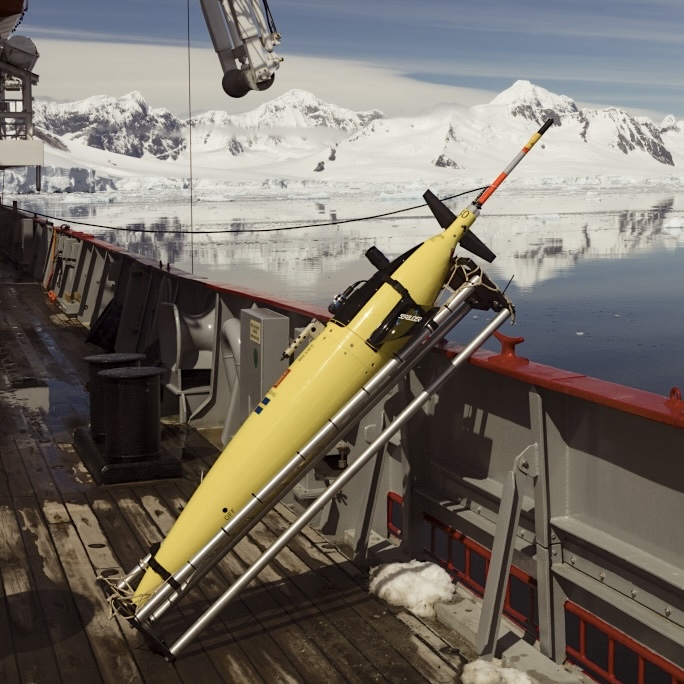
Our goal for WP2 is to identify the dominant processes that link storms, fronts, and fine-scale vertical motions to changes in air–sea heat exchange and ocean heat uptake. To do this, we will make use of new autonomous technologies that simultaneously observe the upper ocean, the air–sea interface, and the lower atmosphere at high resolution. These new observations will take place as part of the Pulse of the Weddell Sea Expedition in late 2027.
The two key instruments include X-Spar buoys that drift with the currents and measure heat, moisture, and momentum fluxes, and underwater gliders that profile the ocean to 1000 m depth. Together, these platforms will capture how storms, turbulent mixing, and small-scale circulations move heat between the atmosphere and ocean.
Using these new observations, we will examine how these processes vary across different mesoscale regimes, seasons, and storm conditions, and use them to benchmark and improve climate model representations of air–sea exchange.
Work Package 3 – From process understanding to prediction
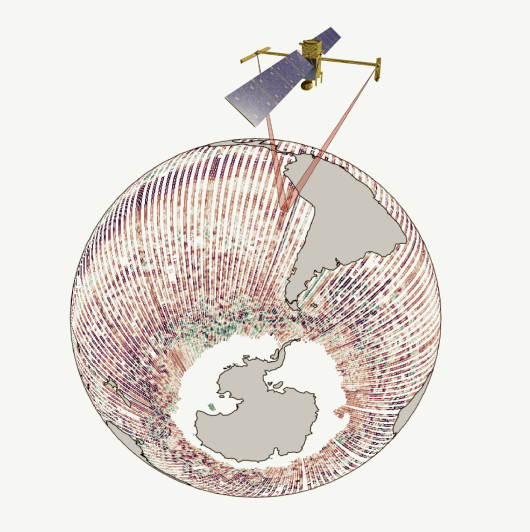
In WP3, we aim to assess how the fine-scale vertical heat transport that we investigate in WP1-2 varies around the entire Southern Ocean, scaling up the detailed process-level insights to a circumpolar view. Our key tool is to use the SWOT wide-swath altimetry, linking fine-scale ocean surface features with vertical ocean heat transport.
Furthermore, we will examin whether this variability is responsive to changes in atmospheric forcing, including storms and large-scale climate modes such as the Southern Annular Mode. This will reveal how small-scale ocean energetics contribute to climate variability and provide a benchmark for future satellite missions and climate model evaluation.
Impact
While high-quality research output is our primary objective, SOFIA strives to have impact beyond this. We hope to contribute to improved reliability in projection of ocean heat uptake, sea level rise, and climate change. We also strive for an improved scientific basis for international climate assessments and policy processes that rely on robust ocean heat estimates. We have a strong focus on training early‑career scientists in autonomous ocean observing, high‑resolution modelling, and open science practices, while developing public‑facing outreach material that explain the Southern Ocean’s role in buffering climate change.
Funder: European Research Council, ERC
Project title: Southern Ocean Fine-Scale Interactions with the Atmosphere (SOFIA)
Amount: € 2 479 552,50
Duration: 5 years
Grant agreement ID: 101222617
The University of Gothenburg is contributing with a strategic co-financing of SEK 3.75 million to the research project, which will greatly assist the project, including the icebreaker expedition to the remote Southern Ocean.