Welcoming Julia Noack to the group
Welcome to the Polar Glider’s Research Team, Julia!
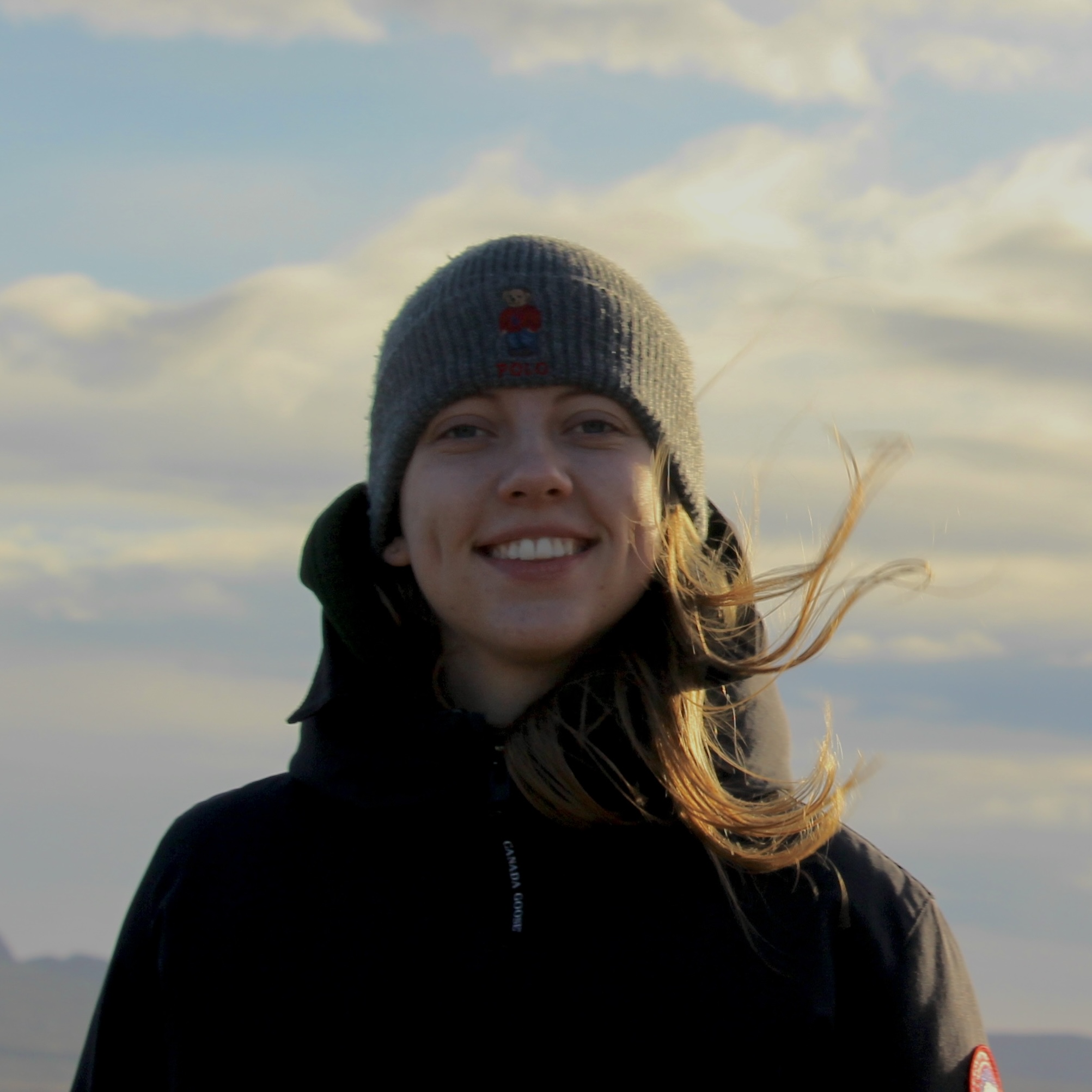
We are very happy to welcome Julia Noack, who joined our group on 1 March as a PhD student working on the SOFIA project and the high‑resolution COAS coupled model simulations of the Southern Ocean. Julia’s position is funded within our broader effort to understand how fine‑scale ocean dynamics and storms regulate air–sea heat exchange and Southern Ocean heat uptake.
What Julia will be working on
Within SOFIA, Julia will analyse the high‑resolution COAS coupled ocean–atmosphere simulation, which uses the MITgcm ocean model coupled to the GEOS atmosphere at around 2-5 km ocean and 7 km atmospheric grid spacing. These simulations resolve much of the submesoscale variability in the Southern Ocean, providing a unique laboratory for studying small‑scale processes that are not represented in standard climate models.
Her PhD will focus on the spatial and temporal variability of submesoscale activity and its role in moving heat from the ocean surface into the interior in the Southern Ocean. She will examine how fronts, eddies and filaments in the COAS output contribute to vertical heat transport and how these processes modulate air–sea heat exchange across different regions and seasons. By connecting process‑scale diagnostics from COAS to metrics relevant for large‑scale heat uptake, Julia’s work will directly support SOFIA’s goal of improving climate model representation of Southern Ocean heat pathways.
Julia’s scientific background
Julia comes to us with a Master’s degree in Atmospheric Sciences, Oceanography and Climate Physics from Stockholm University. For her thesis, she investigated ocean–glacier interactions in Sherard Osborn Fjord, North Greenland, focusing on submarine melting of Ryder Glacier and the melt‑driven circulation within the fjord using a combination of observations and numerical model simulations.
This experience with polar processes, high‑latitude fjord dynamics, and model–data integration is a perfect foundation for her new work on Southern Ocean fine‑scale dynamics.
From Greenland fjords to the Southern Ocean
Julia’s move from Greenlandic fjords to the Southern Ocean reflects a consistent interest in polar ocean dynamics and cryosphere–ocean coupling. In her Master’s thesis, she examined observational data with regard to submarine glacier melting, linking the observed water characteristics in the fjord to melt processes at the base of the floating ice tongue of the glacier and to the fjord circulation by analysing model simulations, and highlighting mechanisms influencing the heat delivery to the ice-ocean interface and thus melting.
Similar concepts now reappear in her PhD; how can we best combine state-of-the-art model capabilities with limited observations to learn about how heat moves within the ocean. The big difference is that now she will be looking at the scale of the circumpolar Southern Ocean.
Why this PhD excites her
Julia is particularly drawn to the Southern Ocean because of its complex dynamics and disproportionate role in the global climate system. She is especially excited about working with the COAS model data, since this kilometre‑scale coupled simulation allows us to study processes on scales that are too small to be resolved by most global climate models.
By digging into these rich datasets, she hopes to uncover new insights into how submesoscale processes help set Southern Ocean heat uptake and, ultimately, the pace of climate warming.
Interests beyond the research
Outside of research, Julia has a strong interest in art and architecture. She enjoys visiting museums, drawing and painting, and exploring how built and visual spaces are designed. We are looking forward to seeing how this creative perspective finds its way into group life, whether through figure design, outreach, or simply good museum recommendations on future conference trips.
Looking ahead
Over the coming years, Julia’s work with COAS will help us map when and where fine‑scale dynamics in the Southern Ocean most strongly influence vertical heat transport and air–sea fluxes, and how that connects to the larger climate system. Her analyses will sit alongside our ongoing observational and satellite efforts in SOFIA, strengthening the links between models, autonomous platforms and new wide‑swath altimetry.
We warmly welcome Julia to our group, and are excited to have her on board and to follow her discoveries in the years ahead.